
Indoor air quality (IAQ) represents one of the most pressing yet underrecognized public health challenges of our time. With humans spending approximately 90% of their lives indoors, the air within homes, offices, schools, and other buildings directly influences health, productivity, and well-being. Poor IAQ can exacerbate respiratory conditions, cardiovascular diseases, and even cognitive impairments, contributing to millions of premature deaths annually worldwide. The recent “Healthy Indoor Air: A Global Call to Action” side event at the 80th United Nations General Assembly (UNGA 80) amplified this urgency, bringing together global leaders to advocate for systemic changes. At nanoDUST, we align with this momentum by offering advanced solutions like our AirPN10 monitor, specifically designed to counter nanoparticles—insidious pollutants that traditional systems often overlook.
The Hidden Dangers of Indoor Air: Key Facts and Health Impacts
Indoor environments can harbor pollutants at concentrations 2 to 5 times higher than outdoors, stemming from sources such as cooking, cleaning products, building materials, and even everyday items like furniture and electronics. These contaminants include volatile organic compounds (VOCs), particulate matter (PM), carbon monoxide, and ultrafine particles, including nanoplastics. Research indicates that the average person inhales tens of thousands of plastic particles daily, which can accumulate in the body and lead to detrimental health effects.
The health toll is staggering. Poor IAQ is linked to a range of issues, including headaches, fatigue, irritation of the eyes, nose, and throat, as well as more severe outcomes like asthma, chronic lung diseases, and heart disease. Vulnerable populations—such as children, the elderly, and those with pre-existing conditions—are particularly at risk, with exposure potentially worsening infections and neurological effects. Globally, household air pollution alone causes an estimated 3.2 million premature deaths each year, disproportionately affecting low- and middle-income countries where inefficient cooking fuels contribute significantly. When combined with outdoor air pollution influences, the total rises to around 7 million annual deaths, representing a massive economic burden equivalent to about 5% of global GDP through lost productivity and healthcare costs.
These facts underscore a critical gap in public health frameworks: while outdoor air quality receives substantial attention, indoor air often remains unmonitored and unregulated, allowing pollutants to build up unnoticed.
Perspectives from the UNGA 80 Side Event: A Catalyst for Change
The “Healthy Indoor Air: A Global Call to Action” event, held on September 23, 2025, in New York City and co-sponsored by France and Montenegro, marked the United Nations’ first dedicated focus on IAQ. This high-level gathering emphasized IAQ as an invisible crisis affecting over 2 billion people, with combined indoor and outdoor pollution linked to 6.7 million premature deaths annually. Experts highlighted how poor indoor air fuels chronic diseases like asthma in children, reduces productivity, and exacerbates inequalities, particularly in low-resource settings where 80% of those impacted reside.
Building on the 2022 UN General Assembly resolution declaring a clean and healthy environment a human right, the event called for recognizing clean indoor air as a fundamental right. Discussions stressed the need for monitoring, as “what gets measured gets managed,” with examples like switching to cleaner energy sources reducing pollution by up to 91%. Policymakers showcased initiatives such as national databases and air quality indices in schools, integrating IAQ into education and labor standards to ensure safe environments for workers and students.
A major outcome was the launch of the Global Commission on Healthy Indoor Air, aimed at developing a Global Framework for Action by 2026 and supporting national blueprints tailored to regional needs. The event advocated for real-time data visibility, unified standards, and investments in ventilation, filtration, and low-emission materials. It also addressed funding gaps, noting that less than 1% of development finance targets air pollution, urging sustainable energy and transport solutions to mitigate both indoor and outdoor threats.
This collective call reinforced IAQ as a transversal issue intersecting health, climate, and equity, inspiring global collaboration to make clean indoor air accessible to all.
nanoDUST’s Contribution: The AirPN10 System for Nanoparticle Mitigation
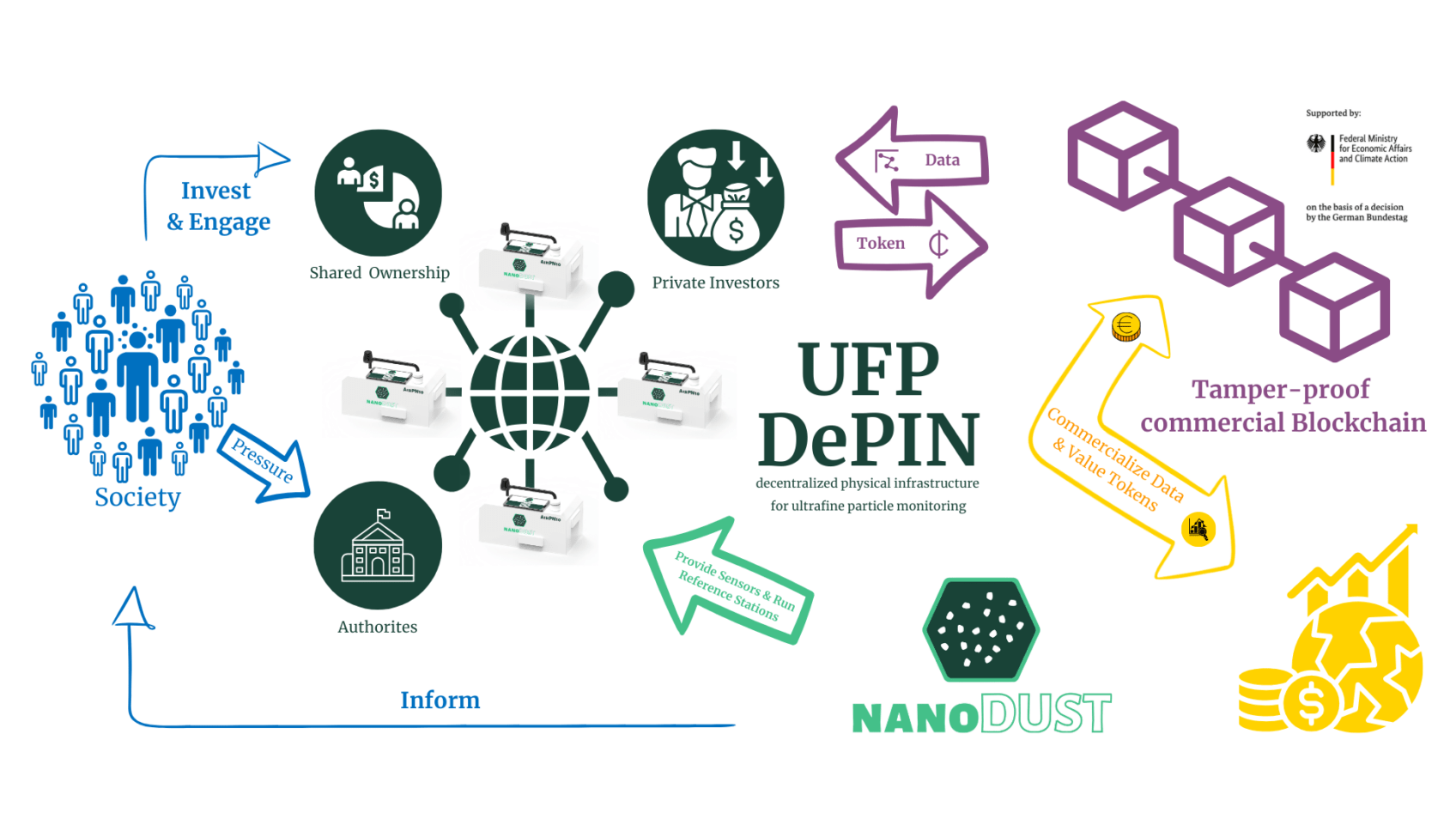
We at nanoDUST operate at the vanguard of aerosol science, with a specialized focus on the quantification and remediation of ultrafine particles (UFPs). Our company addresses the nanoscale vulnerabilities inherent in IAQ, particularly nanoparticles that elude conventional detection methodologies and exacerbate the health adversities delineated herein.
Our flagship innovation, the AirPN10 is a sophisticated, long-term monitoring apparatus engineered to detect nanoparticles. Leveraging Advanced Diffusion Charging principles and proprietary Aerosol Switching Technology, the system quantifies particle number concentrations ranging from 1,000 to 500,000 per cubic centimeter, while delineating particle sizes and differentiating between solid and volatile particulates. This granularity facilitates improved source attribution—whether from combustion byproducts, mechanical abrasion, or plastic degradation—enabling targeted interventions.
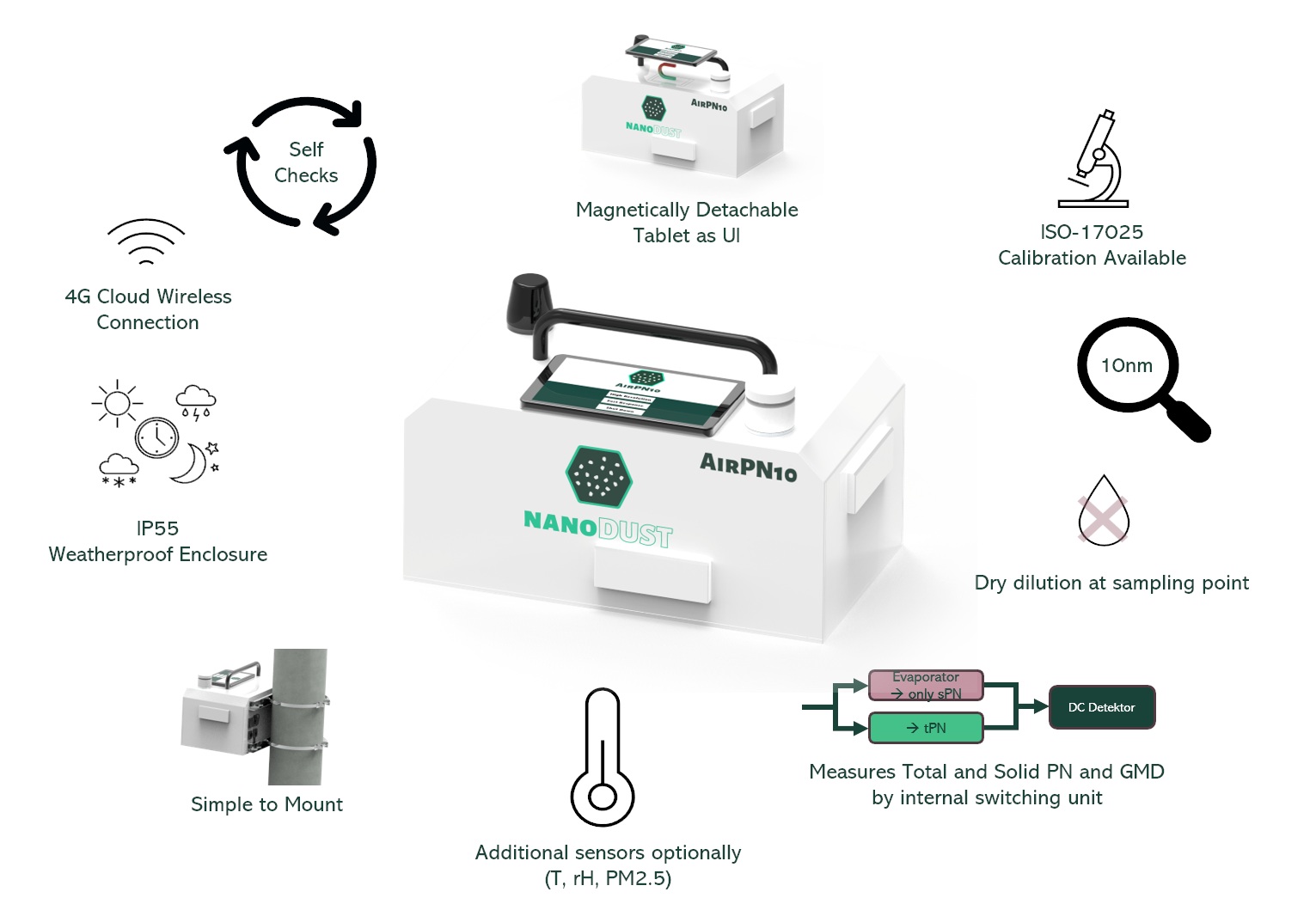
The AirPN10’s design prioritizes practicality: its compact, plug-n-play, low-maintenance architecture renders it suitable for deployment across diverse settings, including residential, commercial, and institutional venues. Empirical validations from pilot implementations, such as those within MI-TRAP research consortium funded by the European Union. The device has high standards by generating verifiable data-sets, thereby aiding policy formulation and resource allocation in underserved populations.
By countering the “nanoscale blind spot” in prevailing IAQ assessments, the AirPN10 aligns seamlessly with global calls for enhanced monitoring and equity objectives.
Conclusion: Toward a Sustainable Paradigm for Indoor Air Quality
The empirical evidence and international consensus, as articulated through platforms like the UNGA 80 side event, compel a re-evaluation of IAQ as an indispensable component of human rights and sustainable development. The pervasive health and economic burdens necessitate coordinated actions, encompassing regulatory enhancements, technological innovations, and equitable resource distribution. nanoDUST GmbH remains committed to this endeavour, offering solutions such as the AirPN10 to mitigate nanoparticle threats and foster healthier indoor ecosystems.

Leave A Comment